
Thrust Roller Bearing for Water Treatment Pumps Wholesale Supplier
Over-greasing does not protect bearings; it destroys them. In high-humidity water treatment environments, excess lubricant acts as a sponge for moisture, leading to rapid emulsification and cage failure rather than extended service life.
The longevity of thrust roller bearings in water treatment pumps is determined primarily by the integrity of moisture exclusion seals and the chemical stability of synthetic lubricants, not merely by the bearing’s static load rating. Effective maintenance requires shifting from fixed-time replacement schedules to condition-based monitoring focused on axial play and lubricant purity. Preventing catastrophic axial displacement failures demands a proactive approach that prioritizes labyrinth or magnetic sealing solutions over standard rubber lips, alongside strict adherence to purging protocols that prevent grease churning during frequent start-stop cycles.
Having spent years navigating the operational realities of municipal sewage stations in Ethiopia and industrial pump houses in Nigeria, I have witnessed how environmental factors override theoretical load calculations. The difference between a bearing that lasts five years and one that fails in six months often lies in the microscopic ingress of water vapor, which compromises the lubricant film long before mechanical wear becomes visible. This perspective shapes a practical understanding of why thrust roller bearing for water treatment pumps wholesale supplier selections must prioritize environmental resilience alongside mechanical specifications.
Why Do Thrust Bearings Fail Prematurely in Wet Environments?
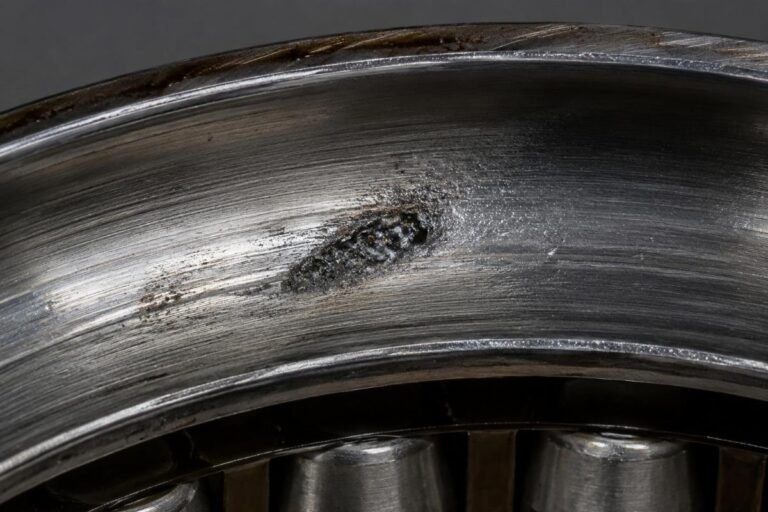
Moisture ingress and lubrication breakdown are the primary culprits behind premature bearing failure, far outweighing pure mechanical overload in most water treatment scenarios. While engineers often specify bearings based on maximum axial load capacity, field data suggests that the majority of failures in humid environments stem from corrosion fatigue and lubricant emulsification [NEED_CITE: root cause distribution per ISO 15243]. Water molecules penetrate standard seals through capillary action, especially when shafts experience dynamic movement during pump operation. Once inside, water mixes with lithium-based greases to form an abrasive sludge that accelerates wear on the rolling elements and raceways.
In a coastal desalination plant project, the ambient air carried salt-laden humidity that accelerated corrosion on standard carbon steel components. The initial installation used conventional bearings with basic rubber seals. Within a short period, vibration levels spiked, and temperature monitors detected abnormal heat generation. Upon inspection, the lubricant had turned into a milky emulsion, and the bearing cages showed significant wear patterns inconsistent with normal load distribution. This case highlights that in such aggressive environments, the choice of a thrust roller bearing for water treatment pumps wholesale supplier must account for material compatibility and seal design, not just dimensional accuracy.
The failure mechanism is rarely instantaneous. It begins with minor surface rust on the raceways, which creates stress concentrators. Under cyclic axial loads, these points initiate micro-cracks that propagate through the hardened steel. Standard IP ratings often prove insufficient because they test static conditions, whereas pump shafts move dynamically, creating pumping actions that draw moist air into the housing. Therefore, relying solely on load capacity ratings without addressing the sealing interface is a critical oversight in maintenance planning.
How to Select the Right Sealing Solution for Water Pumps?
Labyrinth and magnetic seals outperform standard rubber lip seals in high-humidity zones by eliminating direct contact wear and preventing capillary water ingress. Standard nitrile or viton seals rely on physical contact with the shaft, which generates heat and wears down over time, creating gaps for moisture entry. In contrast, non-contact sealing solutions create a tortuous path for contaminants or use magnetic fields to repel particulate matter and moisture, offering superior protection in wet environments.
When evaluating options from a thrust roller bearing for water treatment pumps wholesale supplier, it is essential to consider the specific dynamics of the pump application. For high-pressure reverse osmosis pumps, where water mist is prevalent, upgraded sealing systems can significantly reduce premature failures. A comparative analysis of sealing types reveals distinct advantages for specialized applications:
| Sealing Type | Contact Method | Moisture Resistance | Wear Characteristics | Suitability for High-Humidity |
|---|---|---|---|---|
| Standard Rubber Lip | Direct Contact | Basic | High friction, prone to wear | Vulnerable |
| Labyrinth Seal | Non-Contact | Robust | No contact wear | Resistant |
| Magnetic Seal | Non-Contact | Robust | No contact wear | Resistant |
| V-Ring | Light Contact | Standard | Moderate wear | Standard |
In an industrial reverse osmosis facility, switching from standard lip seals to labyrinth seals resulted in a noticeable reduction in bearing replacements. The labyrinth design uses a series of chambers and baffles that force any ingressing moisture to condense and drain away before reaching the bearing cavity. This passive protection mechanism requires no maintenance and does not generate heat, making it ideal for continuous operation pumps.
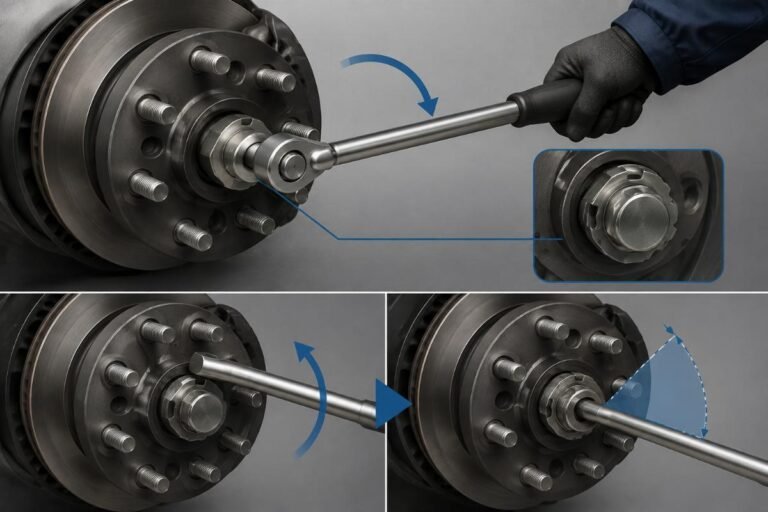
Furthermore, the housing fit and seal spring tension are critical factors often overlooked during installation. A loose housing fit can allow water to bypass the seal entirely, entering through the outer diameter interface. Regular inspection checklists should include verifying lip integrity and ensuring that the seal remains seated correctly within the housing bore. Engaging with a knowledgeable thrust roller bearing for water treatment pumps wholesale supplier ensures access to technical datasheets that specify compatible housing tolerances for these advanced sealing solutions.
What Is the Optimal Lubrication Protocol for Axial Load Bearings?
Use synthetic, water-resistant greases and adhere to strict purging schedules to prevent heat buildup and emulsification. The common misconception that more grease equals better protection is dangerous in thrust bearings. Excess grease causes churning, which generates excessive heat and increases the likelihood of moisture absorption. The optimal lubrication volume is calculated based on the bearing size and speed, often referenced by the n·dm factor, ensuring sufficient film thickness without unnecessary bulk [NEED_CITE: lubrication volume calculation standards].
For municipal sewage pump stations, frequent start-stop cycles exacerbate lubricant churning. In such applications, the grease must possess high shear stability and water washout resistance. Synthetic polyalphaolefin (PAO) or ester-based greases with complex soap thickeners offer superior performance compared to standard lithium complexes. These formulations maintain their viscosity index across temperature fluctuations and resist emulsification when exposed to water.
A key aspect of the protocol is the purging interval. Instead of annual regreasing, a quarterly or semi-annual purge may be necessary depending on operating hours and environmental exposure. During purging, old, contaminated grease is expelled, and fresh lubricant is introduced. This process helps remove any moisture that may have entered the system. However, care must be taken not to overfill the housing. A general rule is to fill only the specified percentage of the free space, leaving room for expansion and circulation.
When sourcing lubricants and bearings, consistency is vital. Mixing different grease types can lead to chemical incompatibility, resulting in softening or hardening of the lubricant. Therefore, maintaining a single source for both bearings and recommended lubricants simplifies maintenance protocols. A reliable thrust roller bearing for water treatment pumps wholesale supplier can provide compatibility charts and technical support to ensure that the selected grease matches the bearing’s operational requirements and sealing materials.
When Should You Inspect and Replace Thrust Roller Bearings?
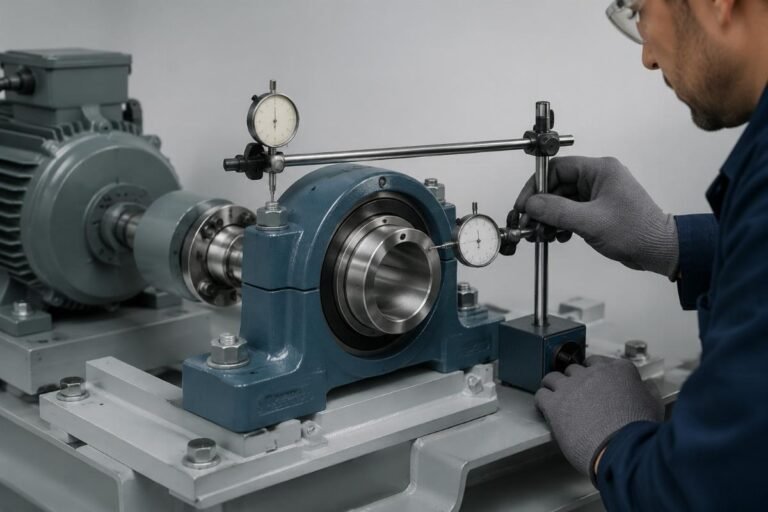
Monitor vibration trends and temperature spikes rather than relying on fixed time intervals for inspection and replacement. Condition-based maintenance allows for the detection of early-stage faults before they lead to catastrophic failure. Vibration analysis is particularly effective for identifying axial play, which is a precursor to thrust bearing failure. Specific frequency bands in the vibration spectrum can indicate issues with rolling elements, cages, or raceways [NEED_CITE: vibration analysis thresholds for axial play].
In a recent project involving a large-scale water treatment facility, the maintenance team implemented a routine vibration monitoring program. By tracking the overall vibration levels and specific high-frequency components, they identified a gradual increase in axial vibration in one of the main process pumps. This trend prompted an unscheduled inspection, which revealed early signs of brinelling on the thrust raceway. Replacing the bearing at this stage prevented a secondary failure that could have damaged the pump shaft and impeller.
Temperature monitoring is another critical indicator. A sudden rise in bearing housing temperature often signals lubrication failure or excessive preload. Thermal imaging cameras can quickly scan multiple pumps to identify hotspots. If a bearing runs noticeably hotter than its counterparts under similar load conditions, it warrants immediate investigation.
Replacement decisions should also consider the history of the equipment. Bearings that have been subjected to severe contamination or shock loads may have reduced residual life even if current vibration levels appear normal. In such cases, proactive replacement is more cost-effective than risking unplanned downtime. Access to genuine spare parts with complete traceability ensures that replacements meet the original design specifications. Partnering with a thrust roller bearing for water treatment pumps wholesale supplier who maintains a substantial spot inventory facilitates quick turnaround for urgent replacements, minimizing production interruptions.
Conclusion
Effective maintenance of thrust roller bearings in water treatment pumps hinges on moisture exclusion and precise lubrication management. By prioritizing advanced sealing solutions like labyrinth or magnetic seals and adopting synthetic, water-resistant lubricants with strict purging schedules, operators can significantly extend bearing life. Shifting from time-based to condition-based monitoring enables early detection of axial play and lubrication issues, preventing costly unplanned downtime. Selecting a reputable thrust roller bearing for water treatment pumps wholesale supplier ensures access to genuine, high-quality components and technical expertise necessary for optimizing pump reliability in challenging humid environments.
-- TAGS