
SKF Heritage Bearing Steel Standards Overview: Wholesale Supplier & Cross-Reference Guide
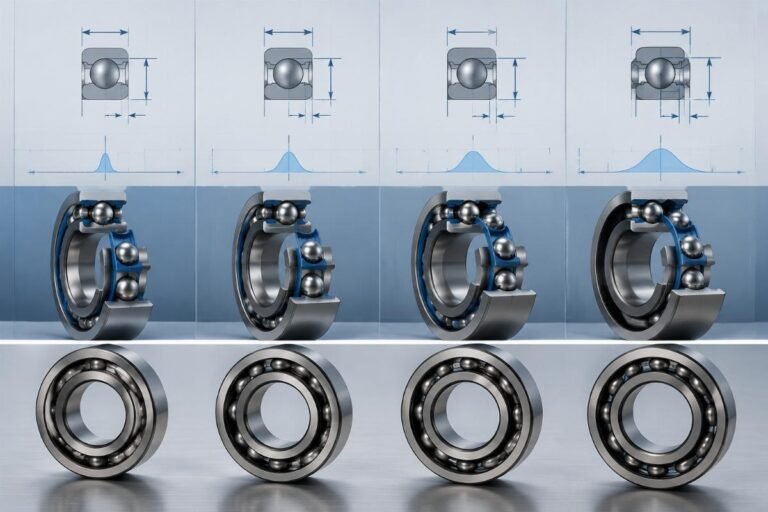
Model numbers match, but the bearing still fails within months — the culprit is rarely the drawing, almost always the steel.
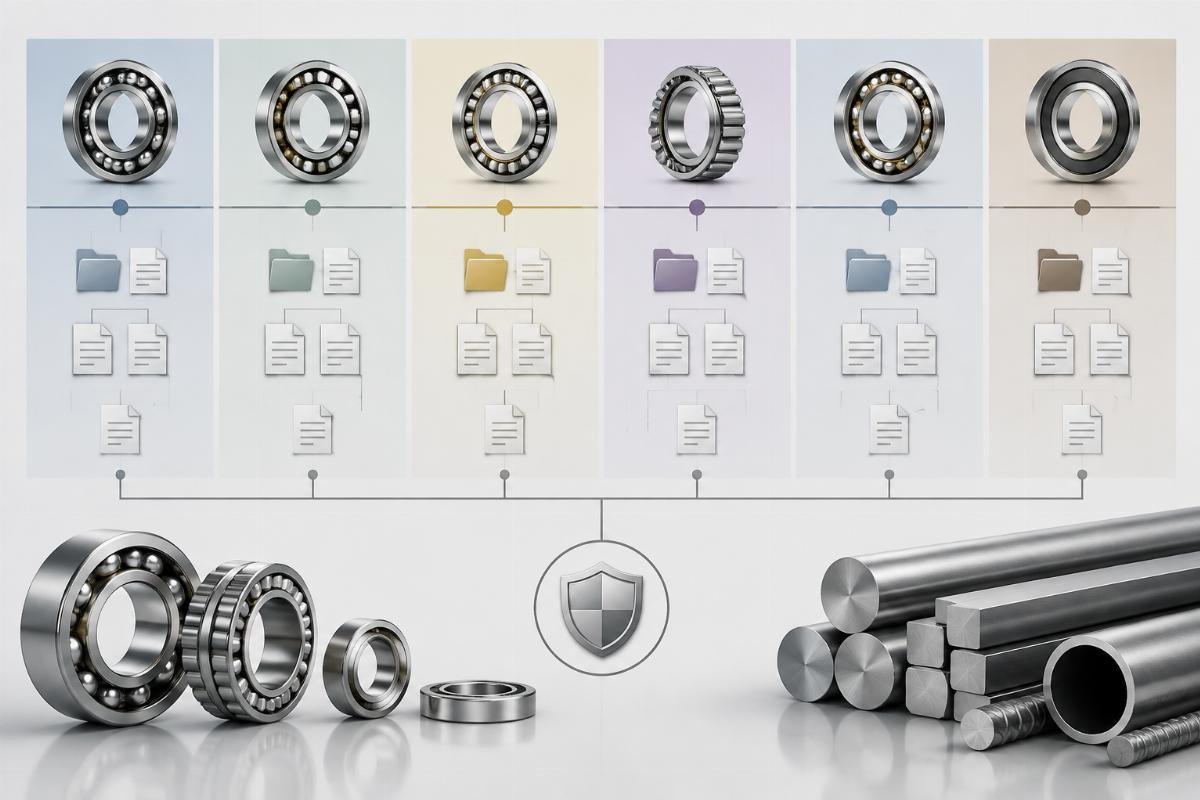
SKF heritage bearing steel standards define the metallurgical baseline that separates genuine long-life performance from premature fatigue; buyers sourcing replacements or cross-referencing brands must verify steel grade documentation, traceability, and heat-treatment pedigree rather than relying on model numbers alone.
I still remember a shipment of deep-groove ball bearings destined for a Middle East steel mill. The buyer had requested a well-known European brand’s 6206 size, and I quoted what looked like a standard replacement. The bearings were dimensionally identical. They ran for a few weeks, then vibration spiked across the line. When the failed units came back, the raceways showed early spalling that no amount of lubrication could explain. Metallurgical analysis later pointed to oxygen content differences at the ppm level — a gap invisible on any dimensional drawing but devastating under load. [NEED_CITE: ISO 683-17 bearing steel cleanliness classification requirements] That case reshaped how I approach every cross-reference request today: the steel comes first, the model number comes second.
From that point on, I stopped treating interchange projects as simple dimension-matching exercises. SKF heritage bearing steel standards are not a marketing phrase — they represent decades of controlled melting, vacuum degassing, and spheroidized annealing practices that define fatigue life ceilings. When a procurement team asks whether an SKF bearing can be swapped for another brand, the real question is whether the alternative steel meets the same heritage baseline.
What Are SKF Heritage Bearing Steel Standards?
SKF heritage bearing steel standards refer to the manufacturer’s long-standing internal specifications for bearing-grade steel, covering cleanliness, carbide distribution, hardenability, and heat-treatment response — specifications that typically exceed generic ISO bearing steel grades.
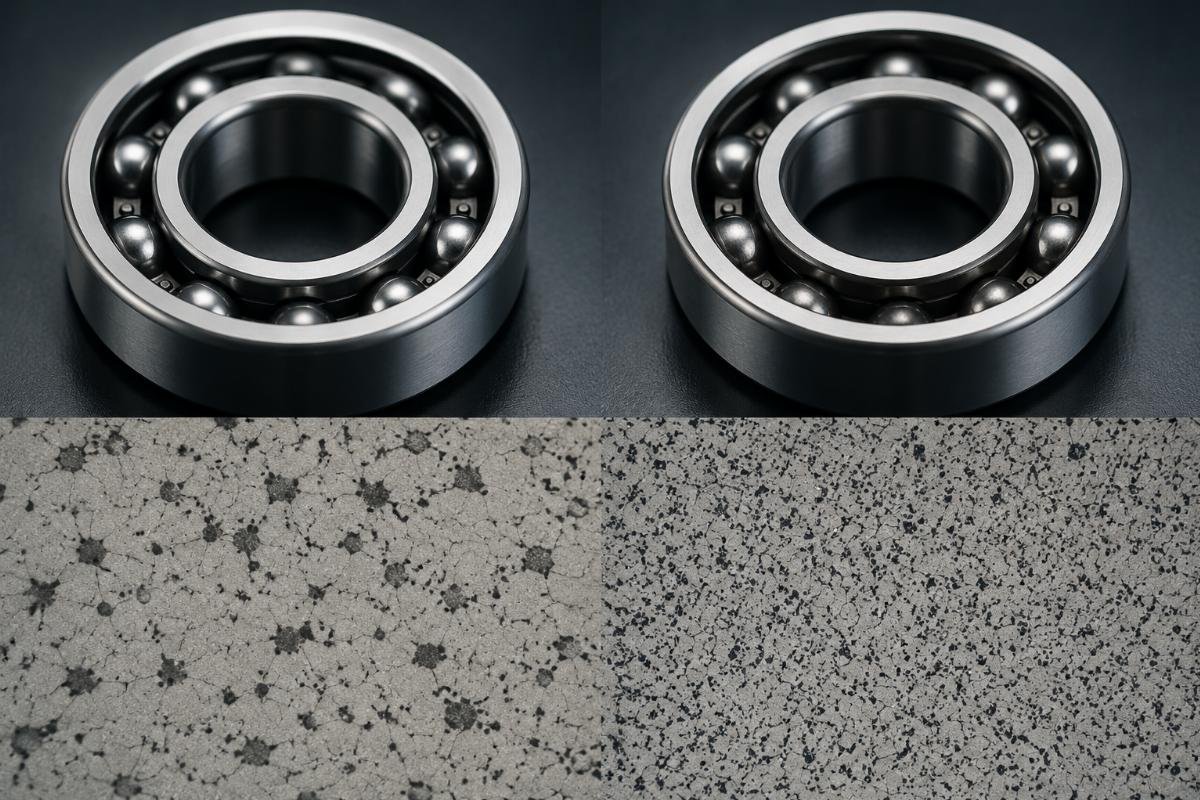
At the core of these standards is the concept of "clean steel." Bearing fatigue does not start on the raceway surface; it starts at non-metallic inclusions buried beneath it. Oxides, sulfides, and silicate clusters act as stress concentrators, and under cyclic loading they become initiation points for subsurface cracks. [NEED_CITE: relationship between non-metallic inclusion size and bearing fatigue life per ISO 15243] SKF heritage bearing steel standards historically demand controlled melting routes — typically vacuum degassing or electro-slag remelting — to keep inclusion counts at the lowest observable tiers.
The second pillar is carbide morphology. After hot rolling, bearing steel must undergo spheroidized annealing to produce fine, uniformly distributed carbides. Coarse or banded carbides create hardness variations that accelerate wear in high-load zones. SKF’s heritage practices emphasize narrow annealing temperature bands and extended holding times, producing a microstructure that responds predictably to subsequent hardening.
The third pillar is hardenability consistency. Every heat of steel must fall within a narrow hardenability band so that quenching produces uniform core hardness and minimal residual stress. When this band drifts, even by a small margin, the result is batch-to-batch life scatter — the kind of problem that only surfaces months after installation.
| Parameter | SKF Heritage Specification Tier | Generic ISO 683-17 Baseline | Unspecified Commercial Grade |
|---|---|---|---|
| Cleanliness class | Controlled to lowest observable tier | Standard compliance range | Uncontrolled |
| Carbide morphology | Uniform spheroidized distribution | Acceptable range | Potentially banded |
| Hardenability band | Narrow, heat-to-heat verified | Standard tolerance | Not guaranteed |
| Traceability | Full heat-level documentation | Mill certificate available | Self-reported only |
A maintenance team at a European pulp mill learned this the hard way. They replaced a set of spherical roller bearings on a dryer roll with dimensionally identical units from a lower-tier supplier. The first batch ran acceptably; the second batch failed within weeks. Investigation revealed hardness scatter across the second batch — a direct consequence of inconsistent hardenability in the source steel. [NEED_CITE: effect of hardenability band width on bearing batch life consistency]
How to Verify SKF Steel Authenticity?
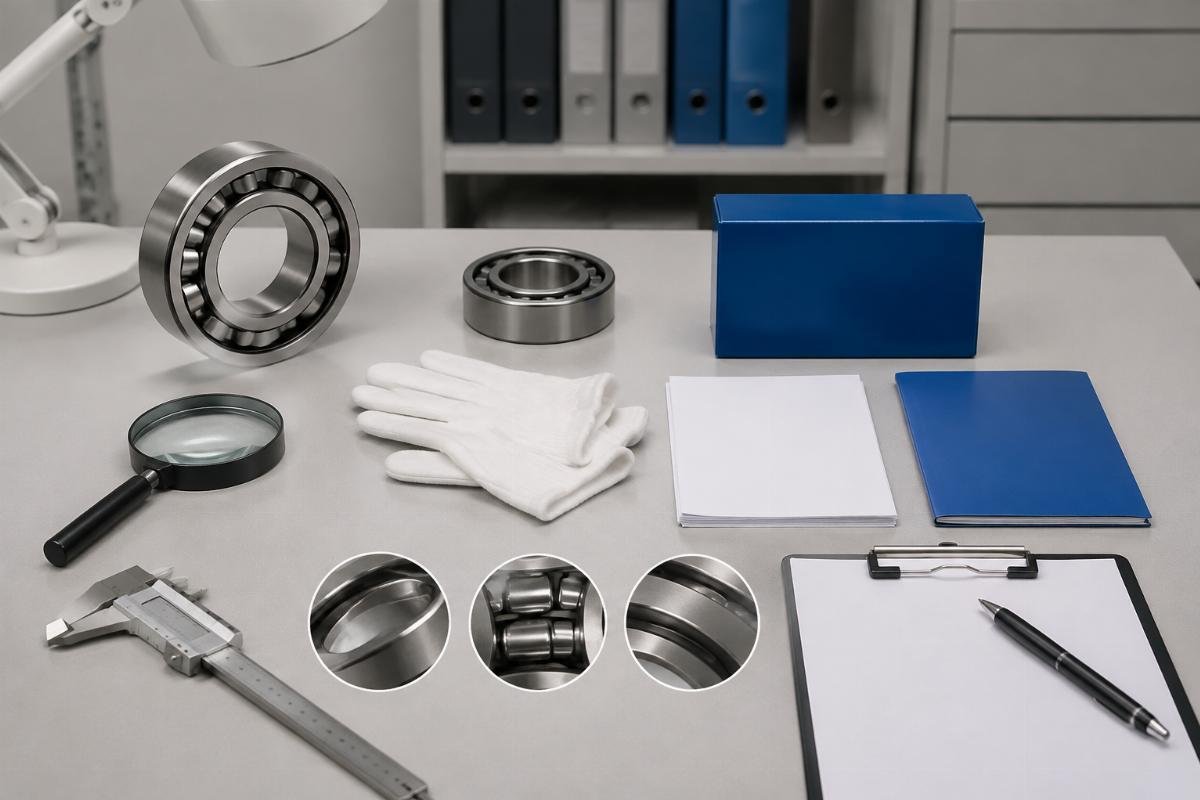
Authenticity verification for SKF heritage bearing steel requires requesting heat-level mill certificates, checking country-of-origin markings against SKF’s known production facilities, and cross-referencing the steel grade code on the bearing ring with official documentation.
The verification process begins with the packaging and marking. Genuine SKF bearings carry laser-etched part numbers, date codes, and country-of-origin markings on the outer ring. These markings must align with the documentation provided by the supplier. [NEED_CITE: SKF anti-counterfeit identification methods and marking standards] Counterfeit bearings often replicate the external appearance but cannot reproduce the internal metallurgical chain.
The next step is requesting the material certificate. A legitimate supplier should be able to provide a certificate that traces the bearing back to a specific steel heat, including the melting route, cleanliness rating, and chemical composition. If the supplier offers only a generic "material test report" without heat-level traceability, that is a red flag.
Third, verify the country of origin against SKF’s known manufacturing footprint. SKF operates production facilities in multiple countries, and each facility has specific product line assignments. A bearing marked with a country where SKF does not manufacture that product type is suspect. [NEED_CITE: SKF global manufacturing facility locations and product assignments]
I worked with a distributor in Southeast Asia who received a batch of tapered roller bearings at a price noticeably below market. The markings looked correct. The packaging looked correct. But when I asked for heat-level certificates, the supplier provided only a batch-level summary. I requested a sample for third-party analysis. The hardness profile was acceptable, but the inclusion count was two tiers above what SKF heritage bearing steel standards would permit. The bearings were well-made counterfeits — dimensionally perfect, metallurgically inadequate.
| Verification Step | What to Request | Acceptable Response | Red Flag |
|---|---|---|---|
| Marking check | Part number, date code, origin | Laser-etched, matches documentation | Stamped or ink-printed |
| Material certificate | Heat-level mill certificate | Full traceability to melting heat | Generic batch report only |
| Origin verification | Country marked on bearing | Matches SKF facility records | Country not in SKF footprint |
| Third-party analysis | Inclusion rating, hardness profile | Within SKF heritage tier | Elevated inclusion count |
Why Do Cross-Reference Failures Happen?
Cross-reference failures occur not because of dimensional mismatch but because of steel purity gaps, heat-treatment differences, and internal geometry variations that model-number interchange tables do not capture.
The most common failure pattern I see is the "vibration surprise." A buyer cross-references an SKF bearing to an alternative brand using a standard interchange chart. The dimensions match. The bearing installs cleanly. It runs for a short period, then vibration levels climb. The root cause is almost never the drawing — it is the steel.
When bearing steel contains higher inclusion densities, the fatigue life drops substantially, even if the initial hardness and dimensional accuracy are acceptable. [NEED_CITE: bearing fatigue life relationship to steel cleanliness per Lundberg-Palmgren theory] The bearing passes incoming inspection but fails in service because the subsurface stress field interacts with inclusions that would not be present in SKF heritage bearing steel standards.
The second failure pattern is clearance mismatch. Interchange charts often assume standard internal clearance, but actual application conditions may require specific clearance classes. A bearing with standard clearance installed in a high-temperature application will lose its internal clearance as components expand, leading to preload, overheating, and premature failure. [NEED_CITE: bearing internal clearance classes and thermal expansion effects]
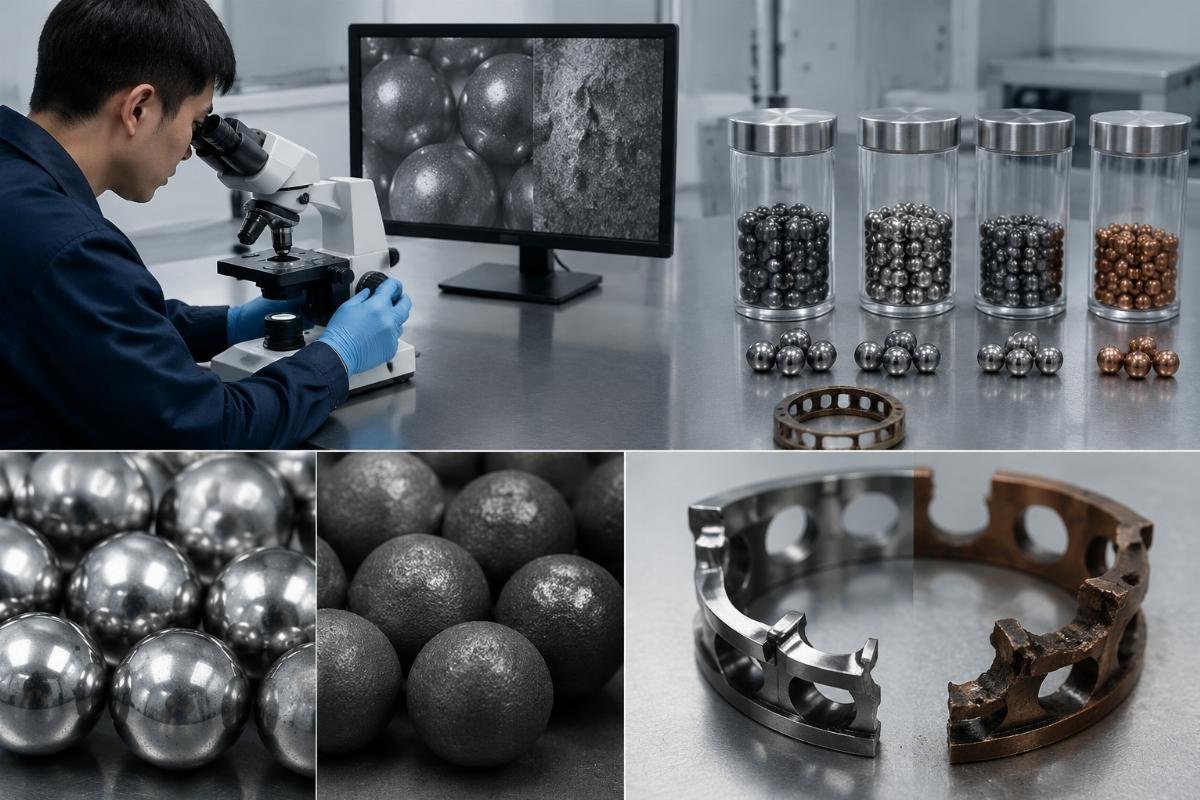
The third pattern is cage material incompatibility. SKF heritage bearing steel standards are paired with specific cage designs optimized for the application. Swapping to an alternative brand with a different cage material — say, from machined brass to molded polymer — can change the bearing’s speed capability, temperature resistance, and lubrication compatibility.
A wind farm operator in Northern Europe replaced a set of main shaft bearings with cross-referenced units from another brand. The dimensions matched. The clearance class matched. But the cage material was different — a polymer design instead of the original machined brass. Within months, several bearings showed cage wear debris in the lubricant. The polymer cage was not rated for the combination of speed and temperature in that application. [NEED_CITE: bearing cage material selection criteria for speed and temperature]
How to Match SKF Steel Standards in Sourcing?
Matching SKF heritage bearing steel standards in sourcing requires verifying steel grade documentation, confirming clearance class alignment with application conditions, selecting appropriate cage materials, and working with suppliers who can provide full traceability.
The first step is defining the application requirements before selecting a bearing. What is the load profile? What is the operating temperature range? What is the expected speed? What are the contamination and lubrication conditions? These parameters determine the steel grade, clearance class, and cage material needed. [NEED_CITE: bearing selection methodology based on application conditions per ISO 281]
The second step is requesting steel grade documentation from the supplier. Do not accept a generic "bearing steel" statement. Ask for the specific grade designation, the melting route, and the cleanliness rating. A supplier who cannot provide this information is not sourcing from a mill that meets SKF heritage bearing steel standards.
The third step is verifying clearance class. Standard interchange charts often list only the basic clearance class, but many applications require specific classes such as C3 or C4 for high-temperature operation, or C2 for precision spindle applications. Confirm that the cross-referenced bearing matches the required clearance class, not just the basic size. [NEED_CITE: bearing internal clearance class definitions and application selection]
The fourth step is selecting the cage material based on application conditions. Machined brass cages offer high speed capability and temperature resistance. Molded polymer cages provide low friction and good lubrication retention but have temperature limits. Stamped steel cages are cost-effective but have speed limitations. Match the cage material to the application, not just to the model number.
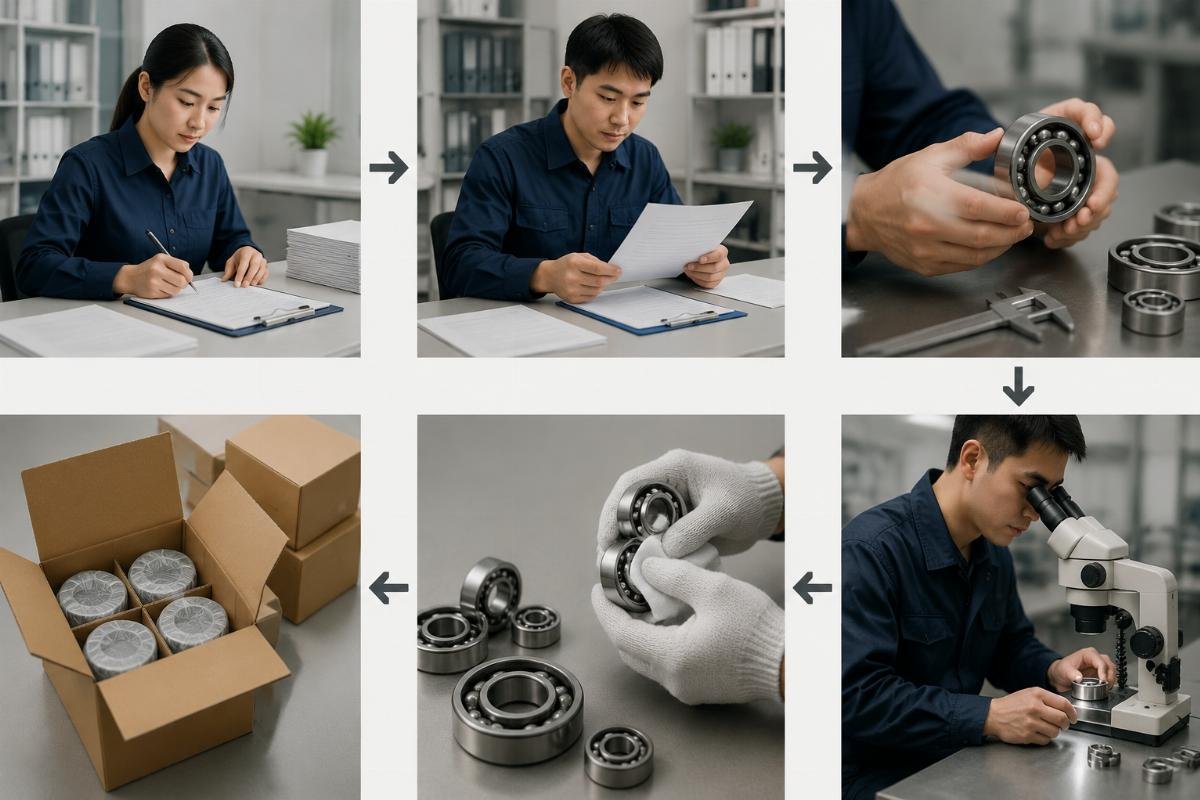
The fifth step is working with a supplier who can provide full traceability and technical support. A supplier who understands SKF heritage bearing steel standards can help you verify documentation, confirm clearance classes, and select appropriate cage materials. They can also provide cross-reference support that goes beyond dimension matching to include metallurgical and application-level compatibility.
| Sourcing Step | Action Required | Documentation Needed | Risk if Skipped |
|---|---|---|---|
| Application definition | Define load, speed, temperature, contamination | Application specification | Wrong bearing selected |
| Steel grade verification | Request melting route and cleanliness rating | Heat-level mill certificate | Substandard steel accepted |
| Clearance class confirmation | Verify C2/C3/C4 class matches application | Bearing specification sheet | Preload or excessive clearance |
| Cage material selection | Match cage to speed and temperature | Cage material specification | Cage failure in service |
| Supplier qualification | Verify traceability and technical capability | Supplier certification | Untraceable product sourced |
I recently assisted a heavy equipment manufacturer in South America who was experiencing inconsistent bearing life across their product line. They were sourcing bearings from multiple suppliers based on price and availability. I helped them implement a sourcing protocol that required steel grade documentation, clearance class verification, and cage material confirmation for every bearing purchase. The result was not just improved bearing life — it was predictable bearing life. [NEED_CITE: bearing life prediction methodology based on steel quality and application conditions]
Conclusion
SKF heritage bearing steel standards set the metallurgical baseline that determines bearing fatigue life; sourcing decisions must prioritize steel grade verification, clearance class matching, and cage material selection over simple model-number interchange.
Cross-reference projects succeed when buyers treat steel documentation as critically as dimensional drawings. Verify the melting route, confirm the cleanliness tier, match the clearance class to your thermal conditions, and select cage materials rated for your speed and temperature. Work with suppliers who can provide full traceability and technical support — because the difference between a bearing that lasts and one that fails early is almost always hidden in the steel.
-- TAGS