
Rod End Bearing Recycling & Disposal: Wholesale Supplier
Most rod end bearings are not pure steel scrap.
Proper disposal of rod end bearings requires separating metallic housings from polymer liners and seals to avoid environmental fines and maximize material recovery value. MRO managers must verify traceability documentation to distinguish between genuine recyclable cores and hazardous counterfeit refurbishments, ensuring compliance with ISO 14001 guidelines and local industrial waste regulations.
I still remember the smell of burning PTFE in a cement plant near Linyi. The maintenance team had tossed hundreds of worn rod end bearing units into a general steel scrap bin, assuming the high-carbon steel bodies would fetch a decent price at the recycler. Instead, the recycling facility rejected the entire load due to polymer contamination. The penalty for mixed industrial waste cost more than the potential scrap revenue. This is a common oversight in heavy industry. Many procurement officers view end-of-life components as simple trash, but the composition of a spherical joint makes it a complex waste stream. [NEED_CITE: classification of composite industrial waste under ISO 14001]
Understanding the material breakdown is the first step toward compliant and profitable disposal. It is not just about throwing things away; it is about resource recovery and risk management.
Why Can’t You Just Throw Rod Ends in the Bin?
Mixed industrial waste triggers immediate compliance flags and financial penalties.
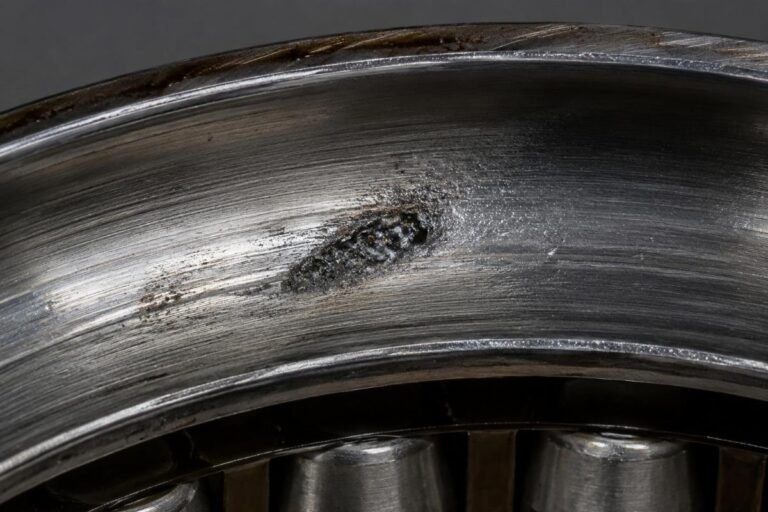
Rod end bearings are composite assemblies. They typically consist of a high-strength steel housing, a hardened steel ball or stud, and a non-metallic sliding layer. This sliding layer is often made of PTFE (polytetrafluoroethylene), bronze-impregnated polymers, or specialized synthetic resins. When these units fail, the polymer liner is usually degraded, fragmented, or contaminated with lubricants and heavy metals from the operating environment.
Throwing these intact units into general steel scrap bins creates two major problems. First, the non-metallic components contaminate the steel melt at the recycling furnace. Modern electric arc furnaces require high-purity ferrous scrap. Polymer residues release toxic fumes and create slag issues, leading recyclers to reject contaminated loads or charge significant decontamination fees. [NEED_CITE: environmental impact of polymer contamination in steel recycling]
Second, many industrial lubricants and sealants used in heavy-duty applications are classified as hazardous waste. If a rod end bearing is saturated with hydraulic oil or grease containing specific additives, it may fall under hazardous waste regulations depending on local laws. In the European Union and increasingly in other regions, improper segregation can lead to severe legal repercussions for the generating site.
A mining operator in West Africa once faced a shutdown notice after an audit revealed that their "general scrap" containers included thousands of lubricated joint bearings. The lack of segregation meant they could not prove the waste was non-hazardous. The cleanup cost far exceeded the value of the steel.
The key is recognition. Not all bearing parts are equal. The steel body is valuable; the liner is a liability if not handled correctly. Ignoring this distinction turns a potential revenue stream into a compliance nightmare.
How to Segregate Materials for Maximum Recovery Value
Separation efficiency determines the residual value of your scrap metal.
To recover maximum value, you must dismantle or segregate the components before they leave your facility. This process transforms a mixed-waste problem into a sorted-commodity opportunity. The goal is to isolate the high-carbon steel housing and stud from the polymer inserts and seals.
The segregation process involves three main streams:
- Ferrous Metal: The outer housing and the ball/stud. These are high-value scrap items, often categorized as heavy melting steel or shredded steel depending on size and shape.
- Non-Ferrous Metals: Some high-end rod ends use bronze bushings or cages. These have a significantly higher scrap value per kilogram than steel and must be kept separate.
- Polymer and Hazardous Waste: The PTFE liners, rubber seals, and any residue-contaminated fragments. These require specialized disposal channels, often incineration with energy recovery or licensed hazardous waste treatment.
| Component Material | Typical Composition | Disposal Category | Recovery Value Potential |
|---|---|---|---|
| Housing & Stud | High-carbon steel, alloy steel | Ferrous Scrap | Moderate |
| Bushing/Cage | Bronze, brass, or steel | Non-Ferrous Scrap | High |
| Liner/Seal | PTFE, rubber, synthetic resin | Hazardous/Special Waste | Negative (Disposal Cost) |
[NEED_CITE: market benchmarks for ferrous vs. non-ferrous scrap pricing]
In a recent overhaul of a large excavator fleet, a construction company in Southeast Asia generated tons of worn joints. By implementing a simple manual separation station where technicians removed the polymer liners before scrapping the steel bodies, they increased the accepted weight of their steel scrap by nearly twenty percent. The recycler no longer deducted for contamination. The bronze bushings were sold separately to a specialized metal trader, covering the labor cost of the separation process.
This method requires minimal investment. A dedicated bin for polymers and a magnetic separator for steel can streamline the workflow. The critical factor is training the MRO team to recognize that the "junk" inside the bearing is not junk—it is a separate waste stream with its own rules.
Segregation is not just about money; it is about data. Knowing how much polymer waste you generate helps in negotiating better rates with hazardous waste disposers and demonstrates environmental diligence during audits.
The Hidden Risk: When "Recycling" Means Dangerous Refurbishment
Not all returned cores are genuine; some are hazardous fakes.
A prevalent misconception in the aftermarket is that returning worn cores to a supplier guarantees a credit or safe recycling. In reality, the "core return" model is rife with fraud. Unscrupulous refurbishers collect worn rod end bearings, perform superficial welding or re-machining, and sell them as "recycled" or "remanufactured" units. These parts often lack the structural integrity of the original forging.
I encountered a batch of such parts in a steel mill project. The buyer had returned cores to a third-party vendor who promised a discount on replacements. The returned "recycled" units were actually poorly welded assemblies. Within months, the welds failed under cyclic loading, causing catastrophic joint failure. The downtime cost was substantial, but the safety risk was higher. A fractured rod end in a high-load application can become a projectile.
Distinguishing between genuine core recycling and unauthorized refurbishment is difficult without traceability. Genuine manufacturers have strict protocols for inspecting returned cores. If the housing shows signs of cracking, excessive wear, or heat damage, it is scrapped, not refurbished. Unauthorized vendors often ignore these safety limits to maximize profit.
| Inspection Point | Genuine Core Recycling | Unauthorized Refurbishment |
|---|---|---|
| Traceability Documentation | Full batch history available | None or fabricated |
| Structural Integrity Check | Ultrasonic/magnetic particle testing | Visual inspection only |
| Material Verification | Spectrometry confirmation | Assumed based on appearance |
| Failure Rate Post-Return | Low, within standard limits | High, unpredictable |
[NEED_CITE: failure analysis standards for remanufactured mechanical components]
For MRO managers, the risk lies in the lack of visibility. If you send your worn rod end bearing units to an unverified vendor, you lose control over their final disposition. They might be dumped illegally, or worse, reintroduced into the supply chain as substandard parts. This creates a liability loop that is hard to break.
The solution is to source from suppliers who provide full traceability documentation from the start. When you buy genuine bearings with verified origin, the end-of-life verification process is simpler. Authorized recyclers can accept these cores because the material composition is known and certified. Unverified aftermarket parts often face rejection because their alloy content cannot be guaranteed, making them a liability for the recycler.
Traceability is not just a purchasing advantage; it is a disposal safeguard. It ensures that when the part reaches the end of its life, it is recognized as a known quantity, not a suspicious unknown.
Best Practices for MRO Teams: Creating a Disposal Protocol
Standardization prevents compliance gaps and value leakage.
Creating a robust disposal protocol for rod end bearing disposal does not require a complete overhaul of your maintenance system. It requires integrating waste management into the existing replacement workflow. The goal is to make proper disposal the default action, not an afterthought.
Step 1: Identification and Collection. Label bins specifically for "Bearing Scrap" and "Polymer Waste." Ensure that technicians know to remove seals and liners if feasible, or at least separate heavily lubricated units from dry ones.
Step 2: Documentation. Keep a log of disposed units, including part numbers, quantities, and dates. This log serves as proof of proper handling during environmental audits. For cross-border shipments of hazardous waste, this documentation is mandatory. [NEED_CITE: requirements for cross-border hazardous waste transfer documentation]
Step 3: Vendor Selection. Partner with certified metal recyclers who understand industrial components. Ask them about their acceptance criteria for composite parts. Do they require pre-separation? Do they offer different prices for clean steel versus contaminated loads?
Step 4: Training. Conduct brief sessions for maintenance staff on the value of segregation. Show them the difference in payout between a clean steel load and a contaminated one. Make it tangible.
A wind farm operator in Northern Europe implemented this protocol across their turbine maintenance teams. By standardizing the collection of worn spherical plain bearings and rod ends, they reduced their hazardous waste volume by isolating the polymers. The clean steel was sold at a premium, and the compliance paperwork became automated through their inventory system.
This structured approach turns a chaotic waste stream into a managed process. It reduces the cognitive load on technicians and ensures that every worn component is handled according to its material properties and regulatory status.
Conclusion
Disposal is part of the lifecycle, not the end of it.
Proper rod end bearing disposal protects your operation from environmental fines and unlocks hidden value in scrap materials. By segregating metals from polymers and insisting on traceable sourcing, you ensure that your waste stream is compliant and profitable. Avoid the trap of unverified refurbishment by partnering with suppliers who prioritize authenticity and documentation. This discipline pays dividends in both safety and cost recovery.
-- TAGS