
Ceramic Bearing Alignment Calibration Standards Wholesale Supplier
Ceramic bearings are not "install and forget" components; their extreme hardness makes them significantly more brittle than steel, rendering them intolerant to the misalignment that standard steel bearings might survive.
To prevent premature raceway cracking and seizure, ceramic bearing alignment standards require tighter angular tolerances, precise thermal expansion compensation for hybrid material pairings, and laser-verified shaft concentricity rather than visual or dial-indicator estimates alone. Ignoring these specific calibration nuances leads to rapid micro-fracturing under load.
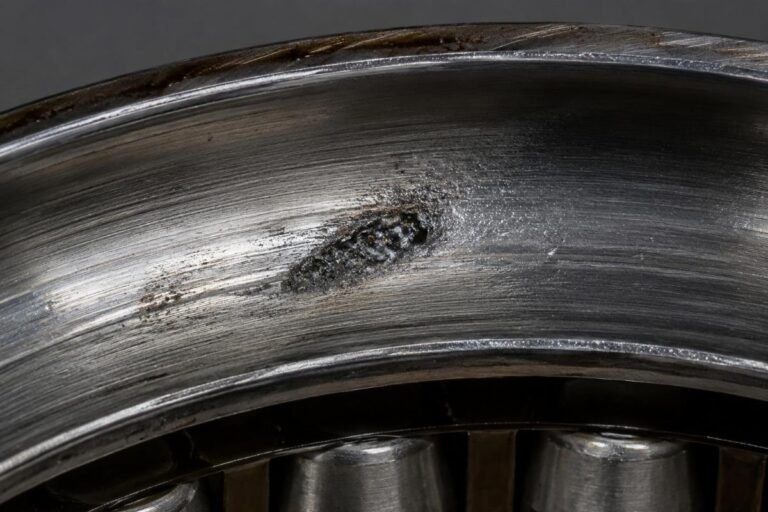
I still recall the humid air in a Riyadh refinery control room, watching a maintenance supervisor scratch his head over a high-temperature compressor that had failed again. The team had installed premium hybrid ceramic ball bearings, expecting them to outlast the previous steel sets by years. Instead, the inner races showed spider-web cracks within months. The issue was not the bearing quality, but the installation protocol. They had used the same alignment gaps and tolerance checks they applied to standard deep-groove steel bearings. In the world of advanced ceramics, that assumption is fatal. [NEED_CITE: failure modes associated with edge loading in brittle materials per ISO 15243]
Understanding why standard practices fail is the first step toward mastering Ceramic Bearing Alignment Standards. It is not about working harder; it is about working with the specific physical properties of silicon nitride or zirconia.
Why Standard Steel Alignment Fails Ceramic Bearings
The core misconception in many workshops is that because ceramic is harder, it is more forgiving. The opposite is true. Steel deforms plastically under slight misalignment, distributing stress. Ceramic does not deform; it fractures. When a shaft is misaligned, even by microns, the load concentrates on a small edge of the raceway rather than spreading across the contact zone. This edge loading creates stress concentrations that exceed the fracture toughness of the ceramic material.
In a typical steel bearing application, a slight angular misalignment might cause increased heat and noise, but the bearing may continue to operate for a considerable time. With ceramic hybrids, that same misalignment initiates micro-cracks that propagate rapidly under cyclic loading. [NEED_CITE: comparative fatigue life data for hybrid vs all-steel bearings under misaligned conditions]
Consider the case of a petrochemical plant in the Middle East. Their maintenance team followed the manufacturer’s general guide for spherical roller bearings, which allowed for a certain degree of self-alignment. However, when they switched to ceramic hybrids for higher speed and temperature resistance, they did not adjust the housing bore tolerances or the shaft straightness checks. The result was a catastrophic failure that required an emergency shutdown. The cost of the downtime far exceeded the price difference between the steel and ceramic units. This highlights why adhering to strict Ceramic Bearing Alignment Standards is not optional—it is a financial imperative.
What Are the Critical Calibration Steps
Calibration for ceramic bearings is not a single action but a sequence of verified steps. The most critical phase is the pre-installation verification of the shaft and housing. Unlike steel, where minor surface imperfections might be smoothed out during run-in, ceramic balls will imprint any irregularity onto the raceway immediately.
First, verify shaft straightness and housing bore cylindricity using precision instruments. Visual checks are insufficient. The shaft must be within tight tolerances for total indicator reading (TIR). [NEED_CITE: ABMA standard recommendations for shaft and housing fits for precision bearings]
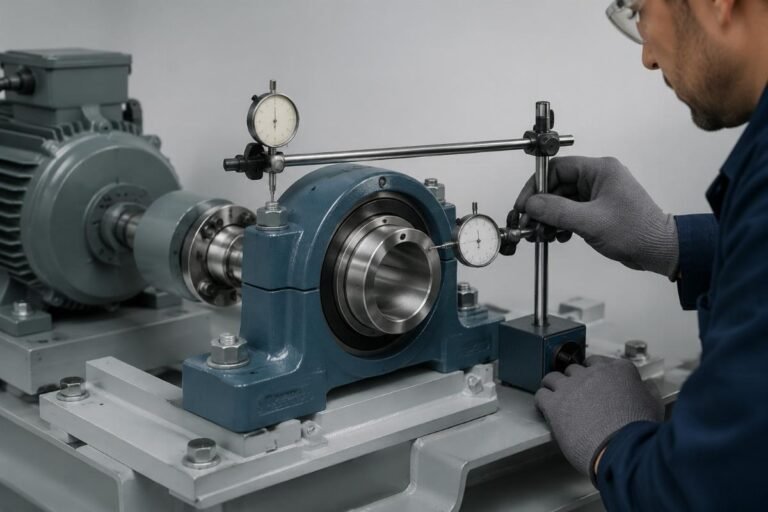
Second, perform laser alignment. Traditional rim-and-face methods with dial indicators can introduce human error and do not account for dynamic thermal growth accurately. Laser systems provide real-time feedback on angular and parallel misalignment. For ceramic applications, the target alignment should be as close to zero as practically possible, often tighter than the general ISO recommendations for standard industrial bearings.
Third, check the preload. Hybrid bearings often have different internal clearance requirements due to the lower density and different elastic modulus of ceramic balls. Incorrect preload can lead to excessive heat generation or skidding. The calibration process must include verifying the axial and radial play after mounting but before final locking.
A machine tool manufacturer in Europe faced vibration issues after retrofitting spindles with full ceramic bearings. They had skipped the detailed preload adjustment, assuming the standard spring preload would suffice. The mismatch in thermal expansion between the ceramic balls and the steel races caused the preload to increase excessively as the spindle heated up, leading to premature wear. Adjusting the preload according to specific thermal calculations resolved the issue. This underscores the need for precise, step-by-step calibration in Ceramic Bearing Alignment Standards.
How Does Thermal Expansion Impact Clearance
One of the most overlooked aspects of ceramic bearing installation is the differential thermal expansion between the ceramic elements and the steel housing or shaft. Silicon nitride has a significantly lower coefficient of thermal expansion compared to bearing steel. As the operating temperature rises, the steel housing expands more than the ceramic bearing outer ring, potentially loosening the fit. Conversely, if the ceramic inner ring is mounted on a steel shaft, the shaft may expand more than the inner ring, increasing the hoop stress on the ceramic.
This mismatch requires calculating the expected thermal growth and adjusting the initial clearance accordingly. Standard ISO clearance classes (C2, C3, C4) are based on steel-on-steel interactions. When mixing materials, these standard clearances may not provide the optimal operating gap at elevated temperatures. [NEED_CITE: thermal expansion coefficients of silicon nitride vs AISI 52100 bearing steel]
For example, in a high-speed application, if the initial clearance is too tight, thermal expansion can eliminate the running clearance entirely, leading to seizure. If it is too loose, vibration and noise will increase. The solution lies in predictive modeling. Engineers must estimate the operating temperature range and calculate the dimensional changes for both the ceramic and steel components. This calculation informs the selection of the appropriate initial clearance class or the need for custom grinding tolerances.
Ignoring this thermal dynamic is a common pitfall. A mining operation once reported immediate seizure of new ceramic bearings in a crusher application. The investigation revealed that the ambient temperature variations were not accounted for in the clearance selection. The bearings were installed with standard C3 clearance, which became insufficient as the equipment heated up during heavy load cycles. Recalibrating the installation protocol to include thermal compensation prevented further failures. This experience reinforces the importance of integrating thermal analysis into Ceramic Bearing Alignment Standards.
Which Tools Ensure Accurate Installation
The right tools are non-negotiable for achieving the precision required by Ceramic Bearing Alignment Standards. Relying on feel or visual inspection is a recipe for failure. The primary tool for modern alignment is a dual-laser system capable of measuring both angular and offset misalignment simultaneously. These systems provide digital readouts that allow for minute adjustments, ensuring the shaft and housing are perfectly concentric.
Additionally, high-precision dial indicators with resolution down to microns are essential for verifying runout and jump limits. While laser alignment handles the static setup, dial indicators confirm the dynamic behavior of the shaft during slow rotation. Any deviation detected here indicates a potential issue with the shaft geometry or bearing seat quality.
Heating tools also play a crucial role. Induction heaters are preferred for mounting inner rings because they provide uniform heating without contaminating the bearing. Open flames or uneven heating sources can create hot spots that distort the raceway, compromising the geometric integrity of the ceramic component. [NEED_CITE: best practices for induction heating of bearing inner rings]
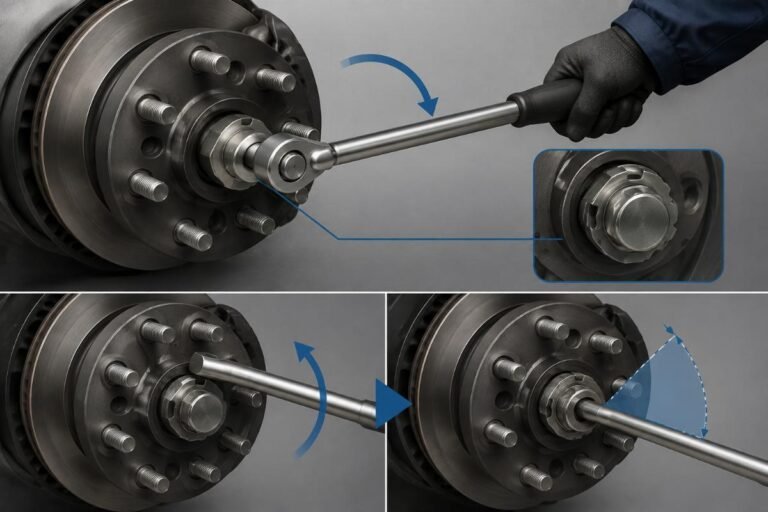
Furthermore, torque wrenches with calibrated settings are necessary for tightening locking nuts and housing bolts. Uneven torque can distort the housing, inducing misalignment even if the shaft was perfectly aligned initially. Using a cross-tightening pattern and verifying torque values ensures that the housing remains true to the shaft axis.
In a recent project for a wind farm operator, the use of standardized laser alignment tools reduced the installation time for main shaft bearings while improving accuracy. The team was able to detect a slight bend in the shaft that would have been missed with traditional methods. Correcting this before installing the expensive ceramic bearings saved significant costs. This demonstrates how investing in the right tools supports the rigorous demands of Ceramic Bearing Alignment Standards.
Conclusion
Precision, thermal awareness, and the right tools define successful ceramic bearing installation.
Standard steel practices are insufficient for ceramic components due to their brittleness and different thermal properties. By adhering to stricter alignment tolerances, calculating thermal expansion mismatches, and using laser verification, engineers can unlock the full performance potential of ceramic bearings. Our technical team provides customized installation datasheets and cross-brand equivalent selection to ensure clients receive not just genuine parts, but the correct technical support for their specific application.
-- TAGS