
Cylindrical Roller Bearing Assembly Guide for Trading Companies Wholesale
Hammering a large cylindrical roller bearing into place is not installation; it is the initiation of micro-cracking that guarantees premature failure.
The core answer to successful assembly lies in three non-negotiable parameters: precise thermal expansion control for the inner ring, accurate verification of internal clearance before and after mounting, and lubrication volume calibrated to operational speed. Mechanical force alone cannot achieve the required interference fit without damaging the raceways or rolling elements. This guide details the technical methodology required to prevent the most common causes of early bearing failure in heavy industry applications.
My early days in Qingdao handling procurement were defined by the panic of emergency shutdown calls from cement plants and mining operations. A NU or NJ series cylindrical roller bearing, once installed with incorrect clearance or insufficient heating on the shaft journal, rarely survived more than a few months. The transition to export supply revealed that international buyers often faced even more critical errors due to a lack of localized technical support. The fundamental lesson learned through thousands of handled sets, from single-row to four-row configurations, is that assembly is not merely about inserting components. It is a calculated balance of temperature, tolerance, and lubrication. [NEED_CITE: ISO 15243 failure mode classification for mounting damage]
Understanding these principles is essential for distributors and MRO engineers who need to ensure their end-users avoid costly downtime. The following sections break down the critical steps for proper Cylindrical Roller Bearing Installation Guide execution.
Why Do Cylindrical Roller Bearings Fail Prematurely After Installation?
Incorrect fit and improper clearance are the primary drivers of early bearing failure, not material defects.
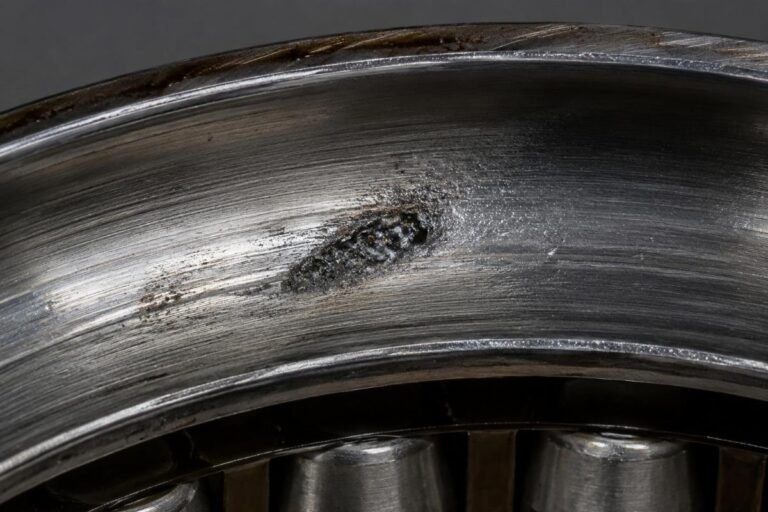
Most premature failures in heavy industries like mining and cement production stem from assembly errors rather than manufacturing flaws. When a bearing is forced onto a shaft without adequate heating, the resulting impact stress creates microscopic cracks in the raceway. These cracks propagate under load, leading to spalling and eventual disintegration. Another common issue is the assumption that "tighter is better" for fits. In reality, excessive interference can eliminate the necessary operational clearance, causing thermal expansion during operation to seize the bearing.
A notable case involved a high-speed fan application in the Middle East. The customer replaced a branded unit with a generic alternative without verifying the cage guidance type. The original design used a specific cage material and guidance method suited for high RPM thresholds, while the replacement did not match these specifications. The mismatch led to cage disintegration under centrifugal force. This highlights the importance of not just matching dimensions, but also functional design elements like cage construction. [NEED_CITE: Bearing manufacturer technical manuals on cage guidance types]
For trading companies, this means providing more than just a part number. It requires ensuring that the technical specifications, including cage type and internal clearance class, align with the original equipment manufacturer’s requirements. A Cylindrical Roller Bearing Installation Guide must emphasize these nuances to prevent such mismatches.
How to Calculate the Correct Heating Temperature for Inner Rings?
Use thermal expansion principles to achieve a secure fit without overheating the bearing steel.
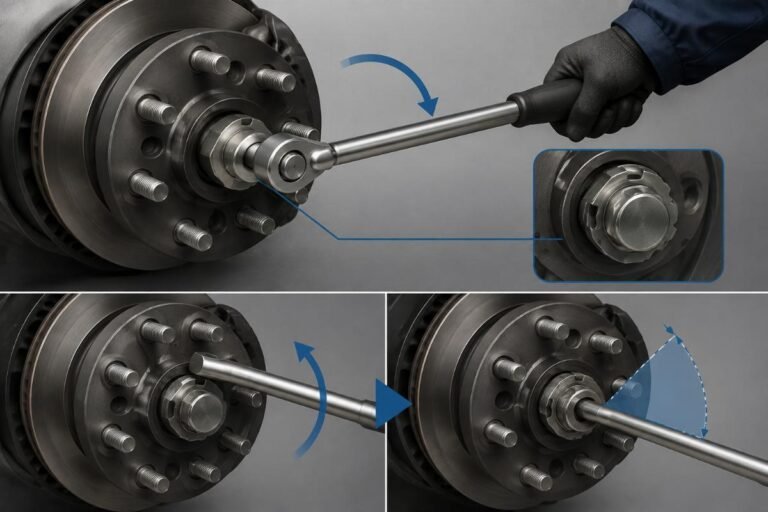
Heating the inner ring is the standard method for achieving an interference fit on cylindrical roller bearings. The goal is to expand the inner diameter sufficiently to slide over the shaft shoulder easily, then allow it to contract as it cools, creating a tight, secure fit. However, exceeding the recommended temperature can alter the metallurgical structure of the bearing steel, reducing its hardness and load-carrying capacity.
The calculation for the required temperature rise depends on the shaft diameter, the desired interference fit, and the coefficient of thermal expansion for steel. Generally, the temperature should not exceed 120°C to avoid damaging the temper of the steel. Induction heaters are preferred over open flames or oil baths because they provide controlled, uniform heating. An oil bath can be used if strictly monitored, but contamination risks must be managed.
In a South American mill scenario, a maintenance team heated an inner ring to a high temperature but failed to account for heat loss during transfer. By the time the bearing reached the shaft, it had cooled slightly, resulting in a loose fit on the shoulder. Axial positioning was compromised, leading to vibration and premature wear. This underscores the need for rapid, efficient transfer and verification of temperature at the point of installation. [NEED_CITE: Thermal expansion calculation formulas for steel components]
When following a Cylindrical Roller Bearing Installation Guide, always verify the temperature using a non-contact infrared thermometer immediately before mounting. Ensure the bearing slides smoothly onto the shaft without forcing. If resistance is felt, stop and re-evaluate the temperature or shaft dimensions.
What Is the Proper Method for Verifying Internal Clearance?
Measure internal clearance before and after mounting to ensure it remains within specification.
Internal clearance is critical for accommodating thermal expansion during operation and ensuring proper lubrication film formation. Cylindrical roller bearings, particularly NU and NJ types, often have adjustable clearance depending on the fit. Mounting the bearing on a shaft with an interference fit reduces the internal clearance. If the initial clearance is too small, or the fit is too tight, the operational clearance may become negative, leading to overheating and seizure.
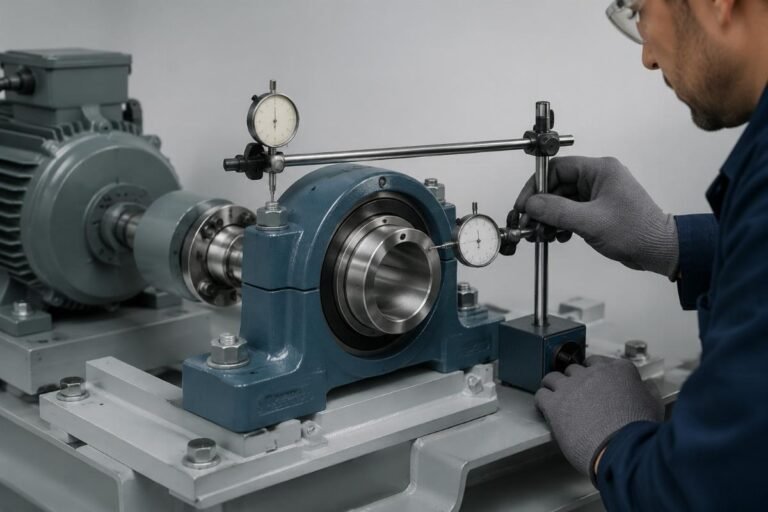
The verification process involves using feeler gauges or dial indicators to measure the radial internal clearance. Before mounting, measure the clearance in the free state. After mounting, measure it again to determine the reduction caused by the interference fit. The final clearance must fall within the manufacturer’s specified range for the operating conditions.
A cement plant experienced an emergency stop due to overheating in a crusher application. Investigation revealed that the initial clearance was not checked before installation. The bearing was mounted with a fit that reduced the clearance below the minimum required for the high-load, high-temperature environment. The resulting friction generated excessive heat, leading to lubricant breakdown and bearing failure. [NEED_CITE: Industry maintenance guidelines for clearance measurement]
This step is often overlooked in field installations but is vital for reliability. A comprehensive Cylindrical Roller Bearing Installation Guide must include clear instructions on how to perform these measurements accurately. For distributors, providing tools or detailed datasheets on clearance limits can add significant value to their customers.
Which Lubrication Strategy Ensures Long-Term Stability?
Select grease or oil based on speed, load, and environmental conditions to maintain a protective film.
Lubrication is the lifeblood of any rolling element bearing. For cylindrical roller bearings, the choice between grease and oil depends on the application’s speed and temperature. Grease is simpler to apply and seal, making it suitable for moderate speeds and temperatures. Oil circulation is preferred for high-speed or high-temperature applications where heat dissipation is critical.
The volume of lubricant is equally important. Over-lubrication can cause churning and overheating, while under-lubrication leads to metal-to-metal contact. General guidelines suggest filling the bearing housing with approximately 30-50% grease for moderate speeds, adjusting based on the specific bearing size and rotational speed. For oil systems, flow rates must be calculated to ensure adequate cooling and film formation.
In many cases, the wrong type of lubricant is used. For example, using a standard lithium-based grease in a high-temperature environment can lead to rapid oxidation and loss of consistency. Synthetic greases or oils with appropriate additives are necessary for harsh conditions. [NEED_CITE: Lubrication volume guidelines based on bearing size and speed]
When advising customers, it is crucial to consider the entire operating environment. A Cylindrical Roller Bearing Installation Guide should provide clear recommendations on lubricant types and quantities. This helps prevent failures related to lubrication starvation or degradation.
How to Troubleshoot Common Assembly Errors?
Identify signs of misalignment, improper seating, and contamination to prevent recurring issues.
Even with careful planning, errors can occur during assembly. Common issues include misalignment, which causes uneven load distribution and premature wear, and improper seating, where the bearing is not fully against the shaft shoulder. Contamination during installation is another frequent problem, introducing particles that damage raceways.
Troubleshooting begins with visual inspection. Look for signs of fretting corrosion on the shaft or housing, which indicates movement due to a loose fit. Check for discoloration on the bearing rings, which suggests overheating. Vibration analysis can also detect misalignment or imbalance issues early.
If a bearing fails shortly after installation, analyze the failure mode. Spalling on the raceway may indicate overload or incorrect clearance. Cage damage often points to high-speed issues or lubrication problems. Understanding these signs helps in correcting the root cause rather than just replacing the component.
Our technical team often assists customers in cross-brand equivalence checks to prevent mismatched components like cage types. Providing installation datasheets and technical support ensures that end-users have the information needed to avoid these common pitfalls. This proactive approach reduces return rates and builds trust with clients. [NEED_CITE: Industry maintenance guidelines for failure analysis]
A robust Cylindrical Roller Bearing Installation Guide serves as a reference for troubleshooting and prevention. It empowers engineers and technicians to make informed decisions during installation and maintenance.
Conclusion
Proper assembly is a precise engineering task, not a mechanical brute-force exercise.
Success with cylindrical roller bearings depends on controlling thermal expansion, verifying clearance, and applying the correct lubrication. These steps prevent the micro-damage and thermal issues that lead to premature failure. By adhering to these technical principles, distributors and end-users can ensure reliable performance in demanding industrial environments.
-- TAGS