
SONCAP Certified Rail Wheelset Bearings Wholesale Supplier
Most importers mistakenly believe SONCAP is a destination stamp; in reality, it is a pre-shipment compliance gate that must be cleared before the cargo leaves the factory.
Successful export of rail wheelset bearings to Nigeria requires securing a Product Certificate (PC) through pre-shipment inspection in the country of origin, not just relying on product quality or destination clearance. Failure to obtain this certificate prior to shipment results in severe demurrage costs and potential cargo rejection at ports like Apapa.
I still remember the humid air and the smell of diesel at the Apapa Port terminal in Lagos. A container of tapered roller bearings, destined for a critical railway maintenance project, sat idle under the sun. The issue was not the bearing quality, nor the packaging. The paperwork was missing a specific Product Certificate (PC). The demurrage charges accumulated daily, eventually exceeding a significant portion of the cargo value. That scene shifted my perspective from merely selling components to managing the entire regulatory lifecycle of SONCAP certification for rail wheelset bearings. In the heavy-duty bearing trade, technical specifications are only half the battle; regulatory alignment is the other. [NEED_CITE: Nigerian Standards Organization guidelines on mandatory pre-shipment verification]
Understanding this regulatory landscape is essential for any distributor or MRO operator looking to maintain supply chain continuity. The following sections detail the critical steps, documentation, and common pitfalls associated with exporting these high-precision components.
Why Does SONCAP Matter for Rail Wheelset Bearings?
Non-compliance with SONCAP regulations does not just delay customs clearance; it can lead to total cargo rejection or prohibitive storage fees that erase project margins.
Rail wheelset bearings are classified as regulated products by the Standards Organization of Nigeria (SON). Unlike general industrial goods that might slip through with minimal scrutiny, railway components are subject to strict safety and quality verification protocols. The primary purpose of SONCAP is to ensure that imported products meet Nigerian Industrial Standards (NIS) or approved international equivalents. For a SONCAP certified rail wheelset bearings wholesale supplier, this means the compliance process begins long before the bill of lading is issued.
The financial implications of non-compliance are severe. At major entry points like Apapa and Tin Can Island ports, storage space is limited and expensive. A shipment held up due to missing certification incurs demurrage charges that compound daily. In one observed case, a batch of spherical roller bearings for a mining crusher was delayed for weeks because the HS code on the SONCAP form did not match the commercial invoice. The resulting downtime cost the end-user far more than the bearings themselves. [NEED_CITE: Impact of port congestion and demurrage on Nigerian import logistics]
Furthermore, railway operators cannot afford uncertainty. A delay in receiving replacement bearings for a locomotive wheelset can halt entire lines. Therefore, the certification is not merely a bureaucratic hurdle but a critical component of operational reliability. Importers who treat Nigeria rail bearing import requirements as an afterthought often find themselves negotiating with port authorities rather than focusing on their core business.
What Are the Critical Steps in the SONCAP Process?
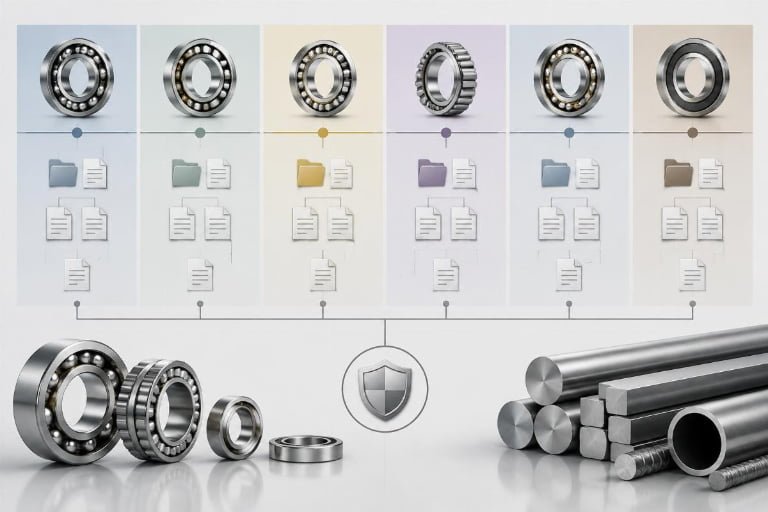
The SONCAP process follows a strict sequence: Product Registration, Form M issuance, Pre-shipment Inspection, and finally, the issuance of the SONCAP Certificate (SC) at destination.
Navigating this pathway requires precise coordination between the exporter and the importer. The process is generally divided into three routes (A, B, and C), depending on the frequency of shipments. For most bulk orders of rail bearings, Route B or C is applicable, involving periodic or comprehensive product registration.
- Product Registration: The exporter must register the specific bearing models with SON. This involves submitting test reports from ISO 17025 accredited laboratories. For rail wheelset bearings, these reports must verify dimensions, load ratings, and material composition against relevant standards. [NEED_CITE: ISO 17025 accreditation requirements for testing laboratories]
- Form M Issuance: The importer in Nigeria initiates Form M through their bank. This document is crucial as it links the financial transaction with the regulatory approval. Any discrepancy between the Form M and the subsequent inspection documents will cause delays.
- Pre-shipment Inspection: An accredited inspection company visits the manufacturing or consolidation facility. They verify the quantity, quality, and packaging of the rail wheelset bearing customs clearance Nigeria requirements. For mixed-brand shipments, every brand present in the container must have valid registration.
- PC Issuance: Upon successful inspection, a Product Certificate (PC) is issued. This document is mandatory for customs clearance in Nigeria.
- SC Issuance: The final SONCAP Certificate (SC) is generated at the destination port upon presentation of the PC and other shipping documents.
A common error is assuming that the supplier handles all aspects. In reality, the importer must actively manage the Form M process. Tight coordination is required to ensure that the inspection date aligns with the production completion date. Delaying the inspection request until the last minute often results in rushed verifications and potential errors.
Which Documents Are Required for Bearing Exports?
Accurate technical datasheets and test reports that precisely match the declared model numbers are non-negotiable for successful SONCAP validation.
The documentation package for exporting rail bearings must be meticulous. Customs officials and inspection agents cross-reference every detail. A minor mismatch in a part number or a missing signature can halt the entire process.
- Test Reports: These must be recent and from recognized laboratories. For rail wheelset bearings, reports should cover fatigue life, hardness, and dimensional accuracy. The model numbers on the test reports must exactly match those on the commercial invoice. [NEED_CITE: Documentation standards for mechanical component imports]
- Commercial Invoice and Packing List: These documents must clearly describe the goods, including HS codes, quantities, and values. The description should specify "rail wheelset bearings" rather than generic "bearings" to avoid classification issues.
- Bill of Lading: Consistency with the Form M and PC is vital. Any deviation in weight or volume can trigger additional inspections.
- Certificate of Conformity: Issued by the manufacturer, this document attests that the products meet the specified standards.
For a PC certificate for railway bearings, the technical data must be robust. Generic certificates that do not specify the application (e.g., railway vs. general industrial) are often rejected. Inspectors look for evidence that the bearings are designed for the high-load, high-speed conditions typical of railway applications.
In cases of mixed-brand consolidations, each brand’s documentation must be separate and complete. If one minor brand in a consolidated container lacks proper registration, the entire shipment may be held. This highlights the importance of verifying the compliance status of every item in a mixed load.
How to Avoid Common Clearance Pitfalls at Apapa Port?
Ensuring HS code accuracy and verifying that all brands in mixed containers are registered are the most effective strategies to prevent clearance delays.
Apapa Port is known for its stringent checks and limited space. Errors here are costly. One frequent pitfall is incorrect HS code classification. Railway axle box bearings have specific codes distinct from general industrial bearings. Using a generic code can lead to misclassification, triggering additional duties or inspections. [NEED_CITE: Nigerian Customs Service HS code classification guidelines for railway parts]
Another common issue is the "mixed-brand" trap. Distributors often consolidate various brands to optimize shipping costs. However, if even one brand in the container is not registered under the SONCAP scheme, the entire container can be flagged. It is essential to conduct a pre-shipment audit of all brands included in the consolidation.
Additionally, discrepancies between the physical goods and the documentation are a major red flag. Inspectors may open random packages to verify contents. If the bearings inside do not match the model numbers on the PC, the certificate becomes invalid. Ensuring that the packing list is detailed and accurate down to the individual box level is crucial.
For those navigating the SONCAP process Apapa port, proactive communication with the clearing agent is key. Providing them with digital copies of all documents before the vessel arrives allows them to pre-validate the paperwork and address any issues before the cargo hits the dock.
How Can Suppliers Facilitate Smoother Certification?
Proactive provision of compliance documents and experience with Nigerian customs requirements significantly reduce the risk of delays for importers.
Suppliers who understand the intricacies of SONCAP certification for rail wheelset bearings can add substantial value to their clients. This goes beyond simply providing the bearings; it involves offering a streamlined compliance service.
Experienced suppliers maintain up-to-date product registrations with SON. They can provide pre-verified test reports that meet the specific requirements of Nigerian standards. This reduces the time and cost for the importer to secure the necessary certifications. Furthermore, suppliers with experience in African railway projects understand the specific technical demands of the region, such as resistance to dust and heat.
When dealing with mixed-brand shipments, a knowledgeable supplier can verify the compliance status of each brand before consolidation. This prevents the scenario where a single non-compliant item holds up the entire order. By acting as a partner in the compliance process, suppliers help their clients avoid the costly pitfalls associated with port delays.
For distributors and MRO operators, choosing a supplier who offers this level of support ensures a more reliable supply chain. It transforms the procurement process from a transactional exchange into a strategic partnership focused on operational continuity.
Conclusion
Compliance is not an optional extra; it is the foundation of successful railway bearing imports to Nigeria.
Securing SONCAP certification for rail wheelset bearings requires careful planning, accurate documentation, and close collaboration between exporter and importer. By understanding the critical steps and avoiding common pitfalls, businesses can ensure smooth customs clearance and maintain the reliability of their railway operations. The effort invested in pre-shipment compliance pays dividends in avoided delays and protected margins.
-- TAGS